If you’ve been paying $100+ a month for cable TV and wondering whether there’s a smarter alternative, IPTV streaming might be exactly what you’re looking for. More households than ever are cutting the cord and making the switch — and for good reason.
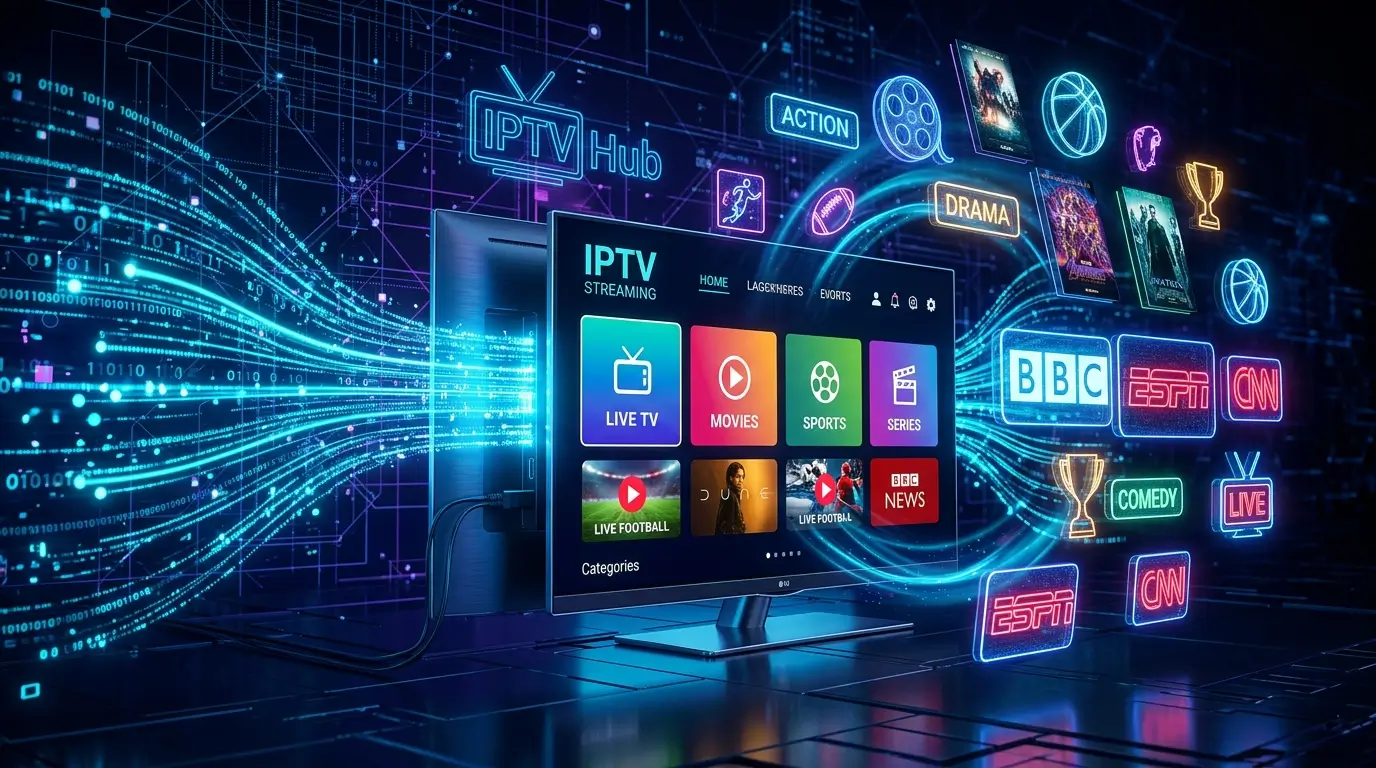
IPTV streaming delivers TV shows and movies over an IP network, allowing users to watch live TV and on-demand content directly on their devices instead of relying on cable or satellite transmission. Inorain It’s a fundamentally different approach to television, and in 2026, it’s becoming the dominant choice for modern viewers.
In this guide, you’ll learn exactly what an IPTV stream is, how the technology works under the hood, how it compares to traditional TV and OTT platforms, and how to get started — legally and confidently.
Table of Contents
What Is an IPTV Stream?
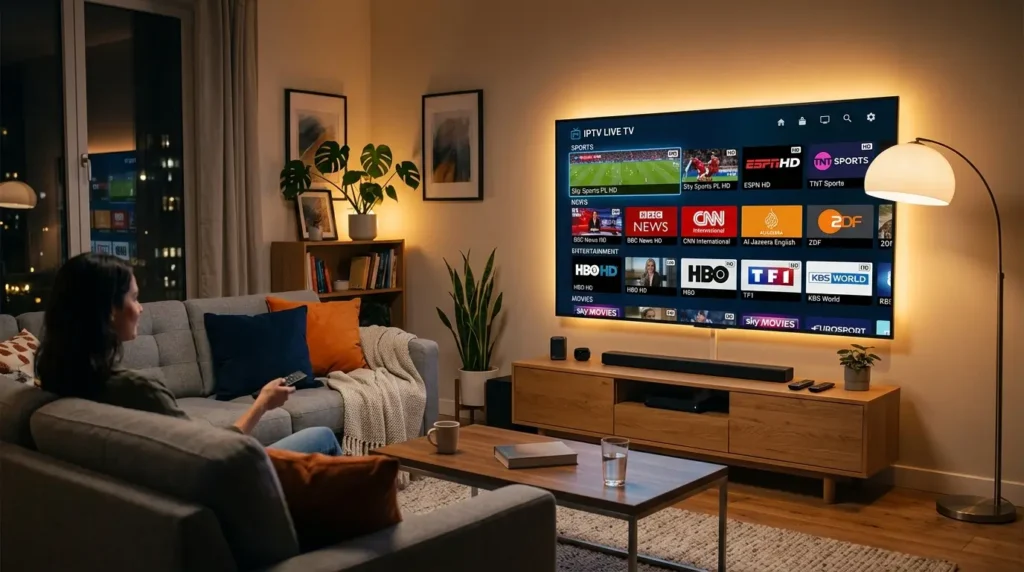
IPTV stands for Internet Protocol Television. Rather than broadcasting signals through physical cables or satellite dishes, it uses your existing internet connection to deliver TV content directly to your device.
Internet Protocol television is a service delivery of television over IP networks, usually sold and run by a telecom provider. It consists of broadcast live television streamed over the internet — in contrast to traditional terrestrial, satellite, and cable transmission — as well as video on demand services for replaying or watching content. Wikipedia
The simplest way to think about it: IPTV is like browsing the web, but instead of opening a webpage, you’re opening a live TV channel or video library. It allows you to watch tens of thousands of channels on any device for a fraction of the cost of cable. Iptvprovider
Crucially, IPTV is not the same as Netflix or YouTube. IPTV is slightly different from digital video accessed on platforms like YouTube or Netflix because it lets you watch live TV shows on different channels — it is not limited to one particular platform.
How Does IPTV Streaming Work?
Understanding the technology behind an IPTV stream helps you appreciate why it performs so well — and what to do when it doesn’t.
When the viewer clicks on any TV program or requests a video, content from different sources (servers) is divided into data packets and sent over the internet. Video servers transmit programs through fiber-optic cable to existing households via an internet connection, and requests are sent out and shows are sent back.
At the core of this process is a head-end server — the central hub where content is gathered from satellite feeds, terrestrial antennas, or direct fiber connections. Encoding and transcoding are the most vital tasks performed at this stage best for iptv, compressing raw video into a format that can travel efficiently across the internet without sacrificing visual quality.
IPTV primarily uses IP multicasting with Internet Group Management Protocol for IPv4-based live television broadcasts and Real-Time Streaming Protocol for on-demand programs. TechTarget
One of the most important technical distinctions is how IPTV handles channel selection. An IPTV service sends only one program at a time — a unicast format. Content remains on the internet service provider’s network, and only the program the end user selects is sent to the user’s device. When a viewer changes the channel, a new stream is transmitted from the provider’s server directly to the viewer.
In 2026, IPTV providers leverage a sophisticated network of Content Delivery Networks (CDNs) combined with adaptive bitrate streaming , meaning the stream automatically adjusts quality based on your connection speed to minimize buffering.
IPTV vs Cable TV vs OTT: What’s the Difference?
Many people lump IPTV, cable TV, and OTT services like Netflix into the same category. They’re not the same — and understanding the differences helps you choose the right option.
IPTV vs Cable TV
Traditional cable relies on a closed, physical infrastructure — coaxial cables running to your home, with signals broadcast continuously regardless of what you’re watching. IPTV only sends the content you actively request, using your broadband connection. Because IPTV works through internet connections, viewers can stream content anywhere without traditional cable infrastructure.
IPTV vs OTT (Netflix, YouTube, Hulu)
While both deliver video over the internet, IPTV is usually offered by telecom operators or ISPs over a managed network, ensuring controlled bandwidth and quality of service. OTT services, such as Netflix or YouTube, are delivered over the open internet and work independently of the user’s internet provider.
In short: OTT gives you a massive on-demand library with no live TV. IPTV gives you live channels, time-shifted viewing, and VOD — more like the traditional TV experience, but delivered over the internet.
Types of IPTV Streaming Services
Not all IPTV streams are built the same. There are three primary formats you’ll encounter:
1. Live IPTV Streaming This mirrors traditional broadcast TV — channels play in real time. Sports, news, and live events fall under this category. You tune into a channel and watch whatever is currently airing.
2. Video on Demand (VOD) VOD allows users to access a vast library of movies and shows at their convenience. Viewers can watch any movie or show via an IPTV server whenever they choose. Think of it as a video rental store with tens of thousands of titles.
3. Time-Shifted TV (Catch-Up) This lets you go back and watch content that already aired — usually within a 7–30 day window. Missed a match or a season finale? Time-shifted IPTV has you covered.
In 2026, IPTV providers have embraced evolving digital consumption patterns by offering massive Video-On-Demand libraries that rival top OTT platforms, with over 60,000 movies and series accessible on demand.
How to Set Up IPTV on Any Device
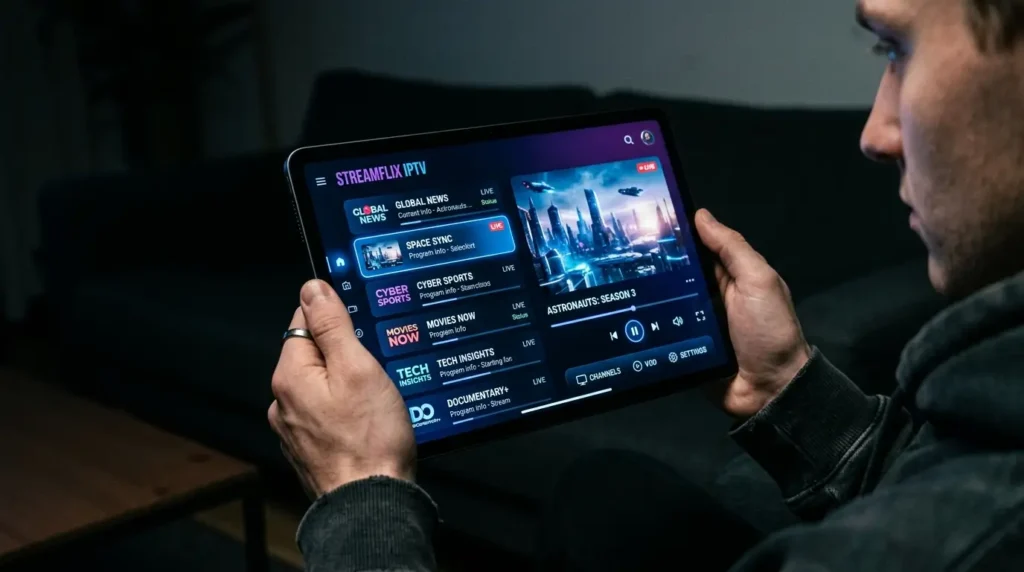
One of the biggest advantages of IPTV streaming is its flexibility. As long as you have an internet connection, IPTV can be accessed on smart TVs, smartphones, tablets, desktops, and other compatible devices.
Here’s a general setup process that applies across most platforms:
Step 1: Choose a Provider Select a reputable, licensed IPTV service (more on this below). You’ll receive login credentials and an M3U playlist URL or an app download link.
Step 2: Install an IPTV App Popular apps include IPTV Smarters Pro, TiviMate, and GSE Smart IPTV. Most are available on Android, iOS, Fire Stick, and Smart TVs.
Step 3: Enter Your Subscription Details Open the app, enter your M3U URL or Xtream Codes (provided by your service), and the channel list will populate automatically.
Step 4: Optimize Your Connection Use Ethernet over Wi-Fi: wired connections drastically reduce packet loss and latency compared to wireless. Enable hardware acceleration in most IPTV apps to offload processing from your CPU and smooth playback.
Step 5: Enjoy Browse live channels, open your VOD library, and set up recordings if your provider supports it.
How to Choose a Reliable IPTV Provider
This is where many first-time IPTV users make mistakes. The market is crowded, and not every provider is worth your money — or legal.
The legality of individual IPTV providers depends on whether they have the proper rights or licenses to distribute the television channels and media content they offer. For this reason, viewers should always research IPTV providers carefully before purchasing a subscription.
Here’s what to look for when evaluating any IPTV streaming service:
Channel Count & Quality: Look for providers with a broad international catalog. Thanks to advances in compression protocols like AV1 and real-time transcoding, subscribers can now enjoy native 4K Ultra HD streams with 60 frames per second even on moderate broadband setups.
Uptime & Server Stability: A good provider maintains 99%+ uptime. Frequent buffering or freezing usually indicates overloaded or low-quality servers.
Transparent Pricing: Avoid providers with “too good to be true” pricing — $5/month providers are usually illegal. A fair price is $15–20/month for a reputable service.
Device Compatibility: Make sure the service works on your specific devices — Fire Stick, Android box, Smart TV, or smartphone.
Customer Support: Test their response time before committing to a subscription. 24/7 live chat support is a strong signal of a serious provider.
Free Trial: Most legitimate providers offer a 24–48 hour trial. If they don’t, that’s a red flag.
Frequently Asked Questions
Is IPTV streaming legal? IPTV is only a delivery method, so the technology itself is legal. However, individual providers must have proper rights or licenses to distribute the content they offer. Stick to licensed services and avoid suspiciously cheap subscriptions.
How fast does my internet need to be for IPTV? For standard HD streaming, a minimum of 10–15 Mbps is recommended. For 4K streams, aim for 25 Mbps or higher. A stable, wired connection will always outperform Wi-Fi.
Can I watch IPTV on my Smart TV? Yes, in most cases. Many Smart TVs support IPTV apps natively through their app stores. If the IPTV app is not available on your TV’s app store, consider using a Firestick or Android box as a workaround.
What is an M3U playlist in IPTV? An M3U file is a text-based playlist that tells your IPTV app where to find each channel’s stream. Your provider will supply this file or URL when you subscribe.
Is IPTV better than cable TV? For most users, yes. IPTV offers more flexibility, lower costs, and broader content access. Traditional cable television packages often cost between $80 and $150 per month , while a quality IPTV subscription typically runs $15–20/month.
Can multiple users watch simultaneously? It depends on the provider’s plan. Most offer multi-connection packages, meaning several devices in your home can stream at the same time under one subscription.
Conclusion
IPTV streaming is not just a trend — it’s the future of television. With an expected compound annual growth rate of 17.8%, the IPTV sector is predicted to expand greatly, with the market projected to reach roughly $115.2 billion by 2026. The technology is mature, the content libraries are massive, and the cost savings over cable are significant.
Whether you’re a sports fan who wants every live game, a movie lover looking for an extensive VOD library, or simply someone tired of paying too much for traditional TV, an IPTV stream gives you more control over what you watch, when you watch it, and on what device.
Ready to make the switch? Start by comparing two or three licensed providers, take advantage of any free trials, and ensure your internet connection is up to speed. The cord-cutting revolution is already here — IPTV is how you join it.