
Table of Contents
Introduction
Finding the right IPTV provider can feel like searching for a needle in a haystack. The market is flooded with options — some legitimate and high-quality, others unreliable or operating outside the law. With streaming now the dominant way people consume television worldwide, choosing the right IPTV provider has never been more important.
A great IPTV provider delivers stable streams, a wide channel selection, solid device support, and responsive customer service. A poor one wastes your money, exposes your data, and buffers at the worst possible moment — like the 90th minute of a crucial match.
This guide gives you a clear, practical framework for evaluating any IPTV provider in 2026. Whether you’re new to IPTV or looking to switch services, you’ll know exactly what to look for — and what to avoid.
What Does an IPTV Provider Actually Do?
An IPTV provider is a company or service that delivers television content — live channels, on-demand video, and catch-up TV — over the internet using IP (Internet Protocol) technology.
Unlike traditional broadcasters that push signals via satellite or cable, an IPTV provider hosts content on servers and streams it directly to your device on demand. This could be a smart TV, a smartphone, a Fire TV Stick, a set-top box, or a browser.
What an IPTV Provider Typically Offers
- Live channel streams — news, sports, entertainment, international channels
- VOD (Video on Demand) — films, series, and documentaries available any time
- Catch-up TV — access to recently aired programmes for a set window (usually 7 days)
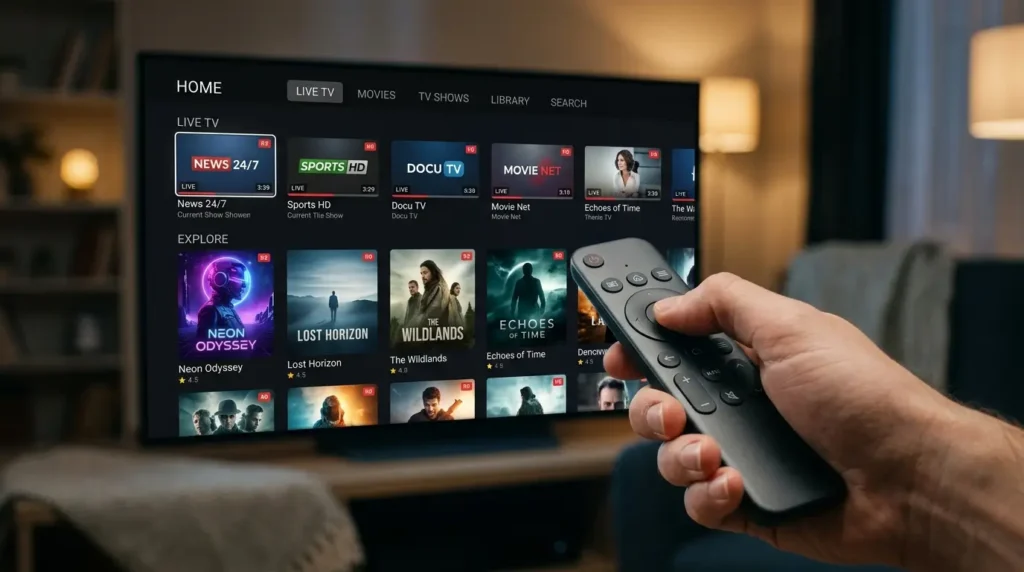
- EPG (Electronic Programme Guide) — an on-screen TV guide showing what’s on now and next
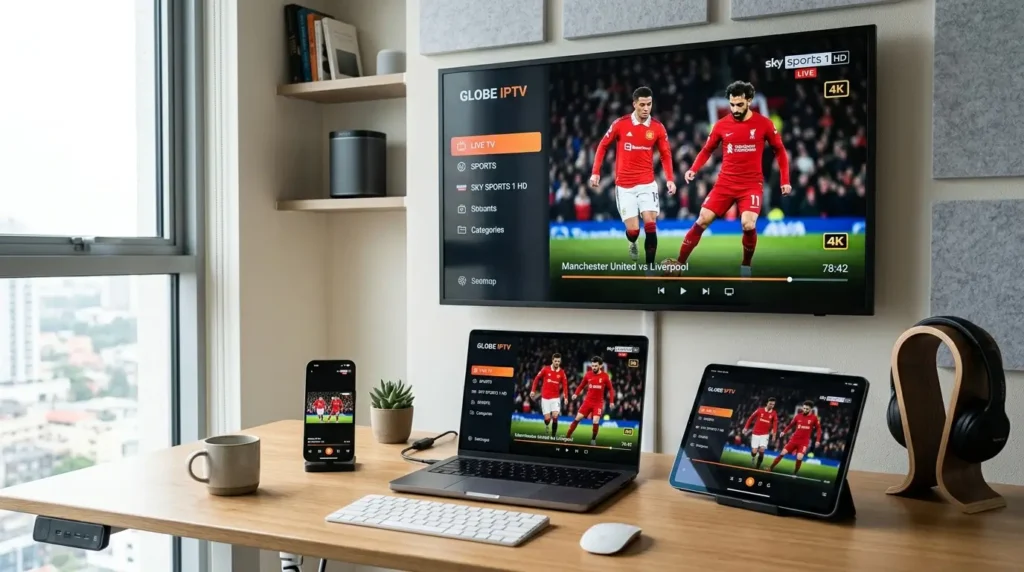
- Multi-device access — the ability to stream on multiple screens simultaneously
The quality of all these features varies enormously from one IPTV provider to the next — which is exactly why careful evaluation matters.
Key Criteria for Choosing an IPTV Provider
When comparing IPTV providers, these are the factors that separate a genuinely good service from a mediocre one.
1. Stream Reliability and Uptime
This is the single most important factor. A provider might offer 10,000 channels, but if streams buffer constantly or drop during peak hours, the service is worthless. Look for providers that advertise — and can demonstrate — 99.9% uptime with redundant server infrastructure.
2. Channel Count vs. Channel Quality
More channels is not always better. What matters is whether the channels you actually want are available, and whether they stream at acceptable quality. A focused provider offering 2,000 well-maintained channels is far preferable to one boasting 20,000 with half of them broken or low-resolution.
3. Video Quality Options
A good IPTV provider should offer streams in SD, HD (720p/1080p), and ideally 4K where applicable. Auto-quality adjustment based on your connection speed is a bonus feature that improves the viewing experience significantly.
4. EPG Accuracy
An up-to-date, accurate EPG is the difference between a polished TV experience and a confusing list of streams. The best IPTV providers update their EPG data daily and cover at least 7 days ahead.
5. Device Compatibility
Your IPTV provider should support the devices you actually own. The broadest providers support:
- Android and iOS apps
- Amazon Fire TV Stick
- Smart TVs (Samsung Tizen, LG webOS, Android TV)
- Apple TV
- Windows and Mac via browser or desktop app
- MAG set-top boxes
6. Number of Simultaneous Connections
If multiple people in your household watch TV at the same time, you need a provider that allows two or more simultaneous streams on a single subscription. Many providers cap this at one unless you pay for a higher tier.
7. Customer Support Quality
A reliable IPTV provider backs its service with real support — live chat, ticket systems, or at minimum a thorough FAQ. Avoid providers that only offer a Telegram handle with no guaranteed response time.
Types of IPTV Providers Explained
Not all IPTV providers operate the same way. Understanding the different models helps you find the right fit.
OTT (Over-The-Top) Streaming Services
These are the most recognisable IPTV providers — platforms like Netflix, Disney+, Apple TV+, and BBC iPlayer. They deliver on-demand and live content over your broadband connection without requiring any broadcast licence or equipment. These are always legal and consumer-friendly, but they typically focus on specific content niches.
Managed IPTV Services
Offered by broadband and telecoms companies (Stream, Virgin Media Stream, BT TV), managed IPTV replaces traditional cable or satellite delivery with internet-based streaming. These are fully licensed, reliable, and often bundled with broadband packages.
Third-Party IPTV Subscription Services
These are independent IPTV providers — not aligned with a major broadcaster — that offer large channel bundles via subscription. Quality and legality vary widely. Some hold proper licensing agreements; others do not. Due diligence is essential before subscribing.
Free Ad-Supported IPTV (FAST)
Free, ad-supported IPTV services (like Pluto TV or Samsung TV Plus) are a growing category. They offer linear channels and on-demand content at no cost, funded by advertising. These are legal and increasingly popular as a complement to paid subscriptions.
Red Flags to Avoid When Picking an IPTV Provider
The IPTV market has a high concentration of low-quality and legally questionable services. Here are the warning signs to watch for.
Suspiciously Low Prices
A full IPTV subscription offering thousands of live channels, full VOD, and 4K sports for £5/month is almost certainly not operating legally. Licensing premium content costs money — if the price seems too good to be true, it almost always is.
No Clear Company Information
Legitimate IPTV providers have a clear web presence, company details, and transparent terms of service. If a provider’s only presence is a Telegram group and a PayPal link, walk away.
No Trial or Refund Policy
Reputable providers offer a short trial period (24–48 hours) or at minimum a money-back guarantee. If a provider refuses any kind of trial and demands upfront payment for a year, that’s a significant red flag.
Unverifiable Claims
“10,000 HD channels” or “99.99% uptime guaranteed” are easy to say. If a provider can’t back these claims up with verifiable reviews, independent testing, or a trial, treat them with scepticism.
Poor or Non-Existent Support
Test the support channel before you subscribe. Send an enquiry and see how long it takes to get a response. A provider that ignores pre-sale questions will almost certainly ignore post-sale problems too.
How to Test an IPTV Provider Before Committing
Most quality IPTV providers offer a trial period. Make the most of it by running a structured evaluation.
Step 1: Test at Peak Times
Stream during the evening (7–10pm) and on weekend afternoons — these are when server load is highest and buffering most likely. If streams are stable during peak hours, they’ll be fine at all other times.
Step 2: Check Your Priority Channels
Make a short list of the 10 channels you watch most. Verify that each one is available, streams at your expected quality, and has accurate EPG data.
Step 3: Test Across Devices
If you plan to watch on your TV and your phone, test both during the trial. Some providers have excellent smart TV apps but poor mobile apps, or vice versa.
Step 4: Evaluate the VOD Library
Browse the on-demand library. Check whether recent releases are available, how often the library is updated, and whether the content matches what was advertised.
Step 5: Contact Support
Raise a test support ticket during your trial — even with a minor query. Observe the response time, the quality of the answer, and the professionalism of the interaction.
IPTV Provider Pricing: What to Expect in 2026
Understanding what fair pricing looks like helps you evaluate whether any given IPTV provider represents good value.
Free Tier / Ad-Supported
Several legitimate IPTV providers operate on a free, ad-supported model. Channel selection is curated rather than comprehensive, but for casual viewing these services are excellent value.
Entry-Level Subscriptions (£5–£12/month)
This price range covers most legitimate on-demand streaming services (ITVX Premium, BritBox, Discovery+). Expect solid VOD libraries, some live channels, and good app support.
Mid-Range Subscriptions (£15–£30/month)
Stream, Apple TV+ with add-ons, and comparable managed IPTV services sit in this bracket. Expect full live TV, comprehensive VOD, and multi-device support.
Premium Bundles (£30–£70+/month)
Full-service packages combining live sports, movies, entertainment, and international channels — equivalent to a traditional satellite TV package. Ultimate TV is the clearest example.
Third-Party Provider Pricing
Independent IPTV subscription providers typically charge £10–£25/month for their full channel packages. Anything significantly below this range warrants extra scrutiny around legality and reliability.
Frequently Asked Questions About IPTV Providers
How do I know if an IPTV provider is legal?
Check whether the service holds broadcasting licences for the content it delivers. Established platforms (BBC iPlayer, ITV) are clearly licensed. For independent providers, look for transparent company registration, clear terms of service, and evidence of rights agreements. If in doubt, choose a known, regulated service.
Can I use any IPTV provider on my Smart TV?
Most modern smart TVs support IPTV through dedicated apps available in their app stores. For providers without an official Smart TV app, a Fire TV Stick or Android TV box provides a flexible workaround.
What is the difference between an IPTV provider and a streaming service?
The terms are often used interchangeably. Technically, IPTV refers to live, scheduled TV delivered over IP networks, while streaming services typically emphasise on-demand content. In practice, most modern providers offer both.
How many simultaneous streams do I need?
For a single viewer, one stream is sufficient. For a family household with multiple TVs and devices, look for providers offering at least three simultaneous connections, or check whether additional connections can be purchased.
Do IPTV providers work with VPNs?
Most IPTV providers are compatible with VPNs. A VPN can improve privacy and, in some cases, help access geo-restricted content. However, using a VPN to circumvent geo-blocks may breach a provider’s terms of service.
What internet speed do I need for a reliable IPTV experience?
A minimum of 10 Mbps is recommended for HD streaming. For 4K content or multiple simultaneous streams, aim for 50 Mbps or more. A wired ethernet connection will always outperform Wi-Fi for IPTV stability.
Conclusion
Choosing the right IPTV provider comes down to four essentials: reliability, content quality, legal compliance, and value for money. The market in 2026 offers outstanding options at every price point — from free ad-supported services to premium full-channel bundles.
Take advantage of trial periods, test providers under real conditions, and never let a low price override your judgement on legitimacy. The best IPTV provider for you is the one that delivers your preferred content, on your preferred devices, without interruption.
Ready to find your ideal IPTV provider? Start with a trial from a reputable service today and experience the difference a quality provider makes.