

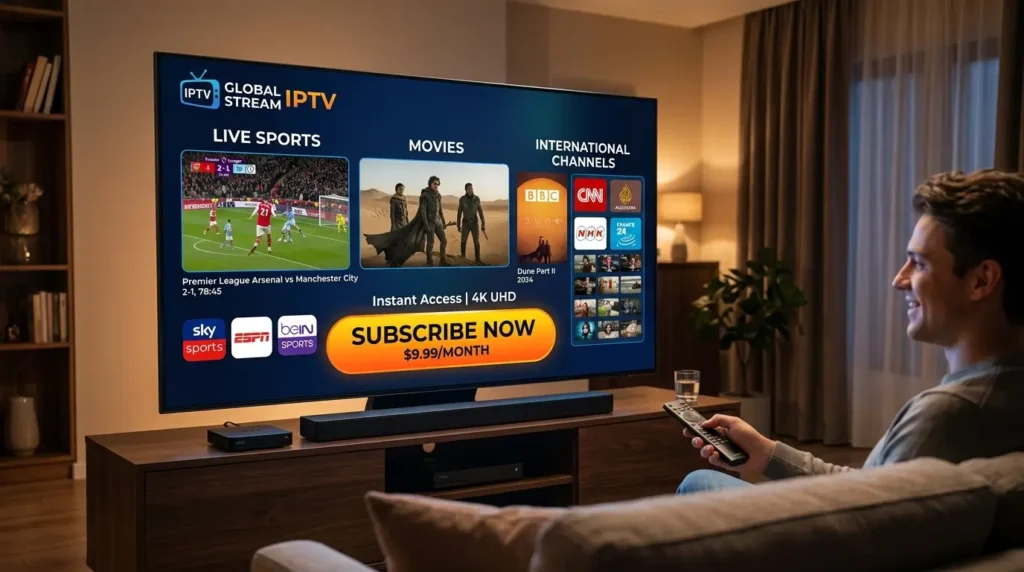
Thinking about iptv subscribe but not sure where to start? You’re not alone. Millions of households around the world are ditching traditional cable and making the switch to IPTV — and the reasons are hard to argue with. More content, more flexibility, and drastically lower monthly bills.
But subscribing to IPTV isn’t as straightforward as signing up for Netflix. The market is crowded, quality varies wildly, and not every provider operates legally. This guide walks you through everything you need to know before you subscribe to IPTV — what to look for, what to avoid, how to set it up, and how to make sure you’re getting genuine value for your money.
Table of Contents
What Does It Mean to iptv subscribe?
When you subscribe to IPTV, you’re paying for access to a streaming service that delivers live TV channels, video on demand (VOD), and often catch-up TV — all over your internet connection, without a satellite dish or cable box.
IPTV, or Internet Protocol Television, delivers television programming through internet networks instead of cable infrastructure. With the right IPTV provider, users can access thousands of live channels, movies, and series on devices such as Smart TVs, Firestick, Android TV boxes, smartphones, tablets, and computers.
Unlike a traditional cable subscription where you pay for a fixed bundle of channels, an IPTV subscription gives you login credentials — typically a username, password, and an M3U playlist URL or Xtream Codes — that you plug into a compatible app on your device. From there, your channel list loads and you’re ready to watch.
The core value proposition is simple: more content, on more devices, for far less money than cable.

What’s Included in an IPTV Subscription?
Not all IPTV subscriptions are built the same, but most premium services bundle three types of content into a single plan.
Live TV Channels This is the backbone of any IPTV service. Premium IPTV providers usually include sports networks covering major leagues, news channels, entertainment programming, and international content. Channel counts across reputable providers typically range from 10,000 to 40,000+ channels covering dozens of countries and languages.
Video on Demand (VOD) IPTV subscription services offer massive Video-On-Demand libraries containing movies, TV series, documentaries, and entertainment programs — with some providers offering access to over 60,000 titles on demand. Think of it as a built-in streaming library alongside your live TV.
Time-Shifted / Catch-Up TV Many providers allow you to go back and replay content that already aired — typically within a 7 to 30-day window. This is a game changer for sports fans and anyone with an unpredictable schedule.
Electronic Program Guide (EPG) A good EPG shows you what’s currently playing and what’s coming up across all channels, making navigation much easier and closer to the traditional TV experience.
How to Choose the Right IPTV Subscription
This is where most people go wrong — choosing based on price alone or falling for flashy marketing. Here’s what actually matters.
1. Streaming Stability and Server Quality
This is the single most important factor. Some providers invest in powerful server infrastructure and reliable streaming technology, while others rely on overloaded servers that result in buffering and unstable streams. Look for providers that openly advertise 99%+ uptime and have verifiable reviews backing it up.
2. Content Library
Check that the service carries the specific channels and content you actually watch. A provider with 40,000 channels is meaningless if none of them are the sports league or regional news channel you care about. Always test before committing.
3. Legal Licensing
Because IPTV is only a delivery method, the technology itself is legal. However, the legality of individual IPTV providers depends on whether they have the proper rights or licenses to distribute the television channels and media content they offer. Always verify a provider’s legitimacy before subscribing.
4. Pricing That Makes Sense
The average monthly cost of a quality IPTV subscription in 2026 is approximately $15.40 per month, compared to $127 or more for cable. Annual plans deliver even greater savings, with most premium providers charging between $65 and $99 for a full year. If a provider is charging $5 or less per month, treat that as a warning sign, not a deal.
5. Device Compatibility
Make sure the service supports the devices you already own — whether that’s a Fire Stick, Android TV box, Smart TV, smartphone, or laptop.
6. Customer Support
For first-time IPTV buyers, reliable customer support can make the difference between a smooth experience and a frustrating one. Look for 24/7 availability through live chat, WhatsApp, or a ticketing system, with response times under two hours for technical issues.
Monthly vs Annual IPTV Plans: Which Should You Pick?
Most IPTV providers offer both monthly and annual billing options. Each has clear advantages depending on your situation.
Monthly Plans offer maximum flexibility. You’re not locked in, and if the service disappoints, you simply cancel and move on. This is the smarter choice for first-time subscribers who haven’t tested the provider thoroughly.
Annual Plans offer significantly better value. Monthly plans are flexible, letting you cancel or change anytime. Annual plans offer discounts but require a year-long commitment. For a provider you’ve already tested and trust, an annual plan typically works out to roughly half the monthly rate.
The recommended approach: start with a monthly subscription or a free trial, use the service for 2–4 weeks across different times of day and for different content types, then switch to an annual plan once you’re confident in the quality.
How to Subscribe to IPTV Step by Step
Subscribing to an IPTV service is straightforward once you know what you’re doing.
Step 1: Research and Shortlist Providers Use review sites, forums, and comparison guides to identify 2–3 reputable providers with strong uptime records and transparent pricing. Avoid making decisions based on advertising alone.
Step 2: Request a Free Trial Always test service quality with short trials before committing long-term. Most legitimate providers offer a 24–48 hour free trial. Use this period to test your specific channels, check stream stability during peak evening hours, and verify 4K quality if that matters to you.
Step 3: Choose Your Plan Select the subscription length and number of simultaneous connections you need. Most IPTV services in 2026 allow between 3 to 5 simultaneous connections by default , which is typically enough for a household.
Step 4: Complete Payment Most providers accept major credit cards, PayPal, and increasingly, cryptocurrency for privacy-conscious subscribers.
Step 5: Receive Your Credentials After payment, you’ll receive your login details — usually a username, password, and either an M3U URL or Xtream Codes API. Keep these details safe.
How to Set Up IPTV After Subscribing
Once you’ve subscribed and received your credentials, setup takes under 10 minutes on most devices.
On a Fire Stick: Enable developer options in your Fire TV settings, download a sideloading app such as Downloader from the Amazon App Store, use it to install your preferred IPTV player, then enter your subscription credentials inside the app.
On an Android TV / Box: Install your IPTV player directly from the Google Play Store. Open the app and enter your M3U URL or Xtream Codes to load your channel list.
On a Smart TV: Search for your IPTV app in your TV’s native app store. If it’s unavailable, a Fire Stick or Android box plugged into an HDMI port is the easiest workaround.
On a Smartphone or Tablet: Download a compatible IPTV player from the App Store or Google Play, enter your credentials, and you’re ready to stream on the go.
Optimization tip: Use a wired Ethernet connection where possible to reduce packet loss and latency. Enable hardware acceleration in your IPTV app to offload video processing and smooth playback.
Red Flags to Avoid When Subscribing
The IPTV market has no shortage of low-quality and outright fraudulent providers. Here’s what to watch out for before handing over any payment.
Suspiciously Low Pricing Services priced below $5 per month are almost always operating on shared panels — meaning hundreds of subscribers sharing the same overloaded server. The cost savings are illusory because degraded performance during peak hours makes them poor value regardless of the headline price.
No Free Trial Offered Any reputable provider will let you test the service before committing. If a provider refuses to offer even a basic trial, that’s a major red flag.
No Customer Support Channel Skipping providers with no support channel is strongly advised. Reliable customer support is essential for solving any problems quickly.
Unverifiable Claims Be cautious of providers claiming millions of channels, 100% uptime, or other guarantees that sound too good to be true. Check independent forums and review communities for real-world user feedback.
No Refund Policy Legitimate providers stand behind their service. If there’s no mention of a refund or money-back guarantee anywhere on their platform, proceed with extreme caution.
Frequently Asked Questions
Is subscribing to IPTV legal? The act of subscribing to IPTV is legal — the technology itself is simply a delivery method. The legality depends on whether the provider has the proper rights or licenses to distribute the content they offer. Always research providers carefully before purchasing a subscription.
How much should I pay for an IPTV subscription? A fair price is $15–20 per month for a reputable service. Be wary of providers charging $5 per month, as these are usually unstable. Iptvprovider Annual plans from quality providers typically reduce the effective monthly cost to $8–12.
How many devices can I use with one IPTV subscription? Most IPTV services in 2026 allow between 3 to 5 simultaneous connections by default. If your household needs more, look for providers offering multi-connection upgrades.
Do I need a VPN with my IPTV subscription? While not strictly mandatory, using a VPN with IPTV is highly recommended for privacy, security, and potentially bypassing geo-blocks. VPNs encrypt your internet traffic, safeguarding personal data from ISPs. They may also improve streaming performance by preventing ISP throttling.
What internet speed do I need? For HD streaming, a stable 10–15 Mbps connection is sufficient. For 4K content, aim for 25 Mbps or higher. A wired Ethernet connection will always outperform Wi-Fi for IPTV streaming.
Can I cancel my IPTV subscription anytime? IPTV subscriptions are typically month-to-month. You’re not locked into a 12-month or 24-month contract. If a service doesn’t meet your standards, you cancel and choose another. This level of consumer freedom simply does not exist with traditional cable.
Conclusion
Subscribing to IPTV in 2026 is one of the smartest decisions a cord-cutter can make — but only if you choose the right provider. The difference between a great IPTV experience and a frustrating one almost always comes down to server quality, licensing, and support.
Take the time to shortlist legitimate providers, request a free trial, test the service during peak hours, and read real user reviews before committing. Start with a monthly plan, verify the quality over a few weeks, and then switch to an annual plan for maximum savings.
The cable era is ending. An IPTV subscription is how you step into what comes next — on your terms, on any device, at a fraction of the price.




If you’re discovering the world of color analysis, understanding your season can truly change your wardrobe choices. For example, if you have light olive skin with a red undertone, you might notice the deep summer or soft winter color palette especially suitable. Many people also find it hard to identify their skin tone using the 16 season color analysis test or complimentary color analysis resources available online, which often include a detailed skin tone chart to help pinpoint colors that complement yellow undertone skin or pale olive skin tone.
For those using the Color Analysis Pro app, it’s good to learn how to cancel your subscription if needed — many wonder how to cancel Color Analysis Pro subscription or the colour analysis pro cancel subscription pathway. You can find valuable information and login info at [url=https://freecoloranalysis.org]color analysis cancel subscription[/url] . Bear in mind that choosing the best clothing colors for Asian skin tone female or uncovering your color palette like deep summer or soft winter palette can make a significant difference in your daily style and confidence.